

For a New Tech at a Gold Class® Shop, Pushing a Broom Can Lead to Being Groomed for Tech Job
01/10/2024 by I-CAR
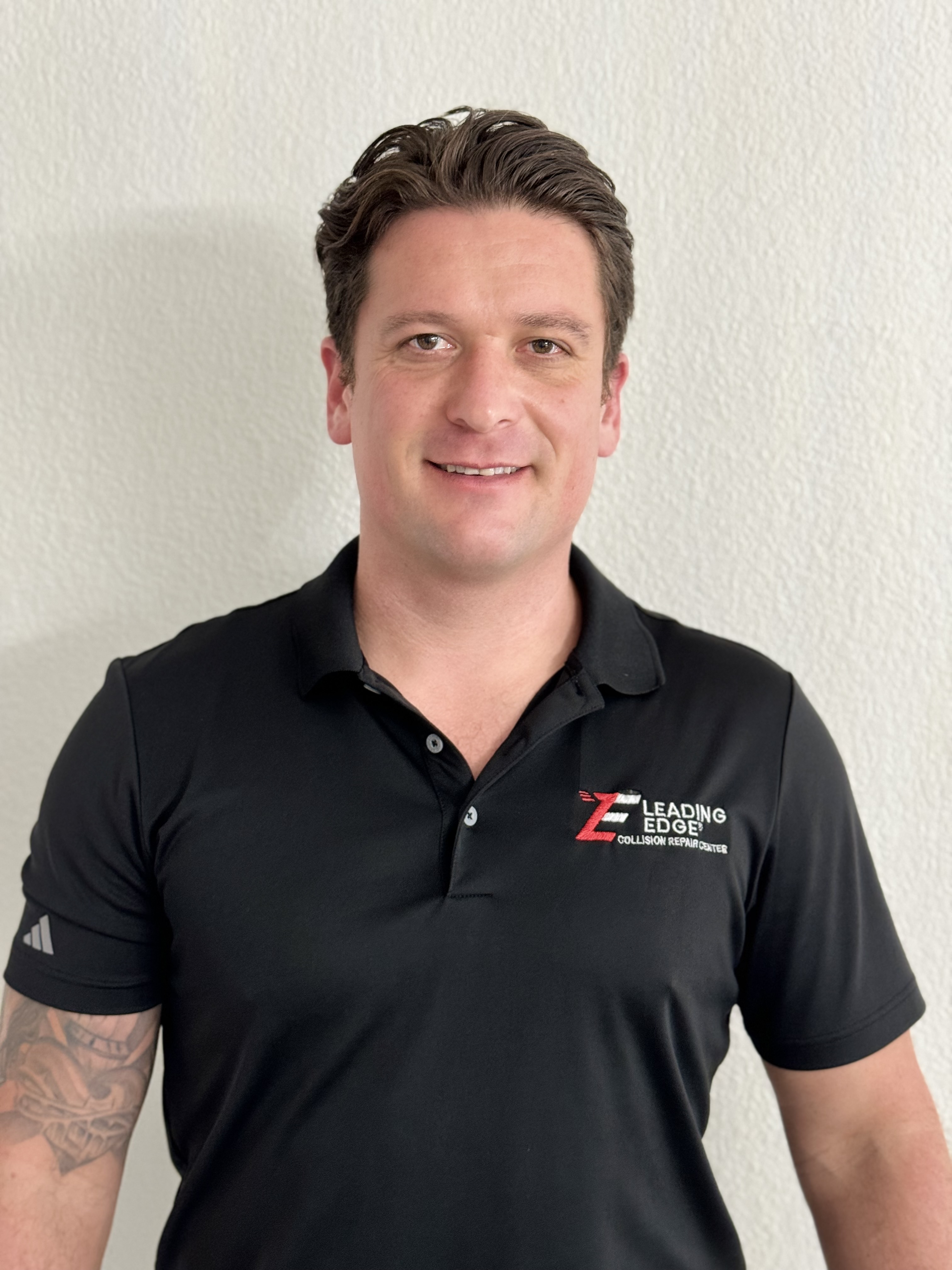
Steady encouragement steered I-CAR volunteer Adan Ibarra in a direction that mainly benefits, depending on your perspective, either this former technician who now runs his own business or his 30 employees at Leading Edge Collision in Houston, where entry-level new hires start out pushing a broom but can quickly move up like 22-year-old production manager Kaleb Higginbotham. From the broadest of perspectives, it is the collision repair industry that’s better off with Ibarra in it. He heads efforts to support local schools as the chair of I-CAR’s Houston-Galveston committee and gives input as a member of I-CAR’s Member Council.
“This industry has given me so much,” he says. “It’s important to give back.”
Ibarra talks animatedly about how his relationship with I-CAR has evolved. Twenty years ago, I-CAR meant one thing to him ̶ Platinum™. Today, he is proud to be an active contributor to the I-CAR community, with opportunities like participating in industry feedback sessions.
“When I was at UTI (2001-02), I really wanted to be Platinum. It meant the best in training, that you reached the top tier of technicians; and it still does. To go from that, from just wanting to be Platinum, to sitting with I-CAR executives, and speaking my opinion and being listened to, to be involved on that scale, well it’s huge to me.”
Importance of Mentoring
With a drive to excel and a passion for cars dating back to a childhood Mattel® Matchbox® collection, Ibarra could have succeeded in any number of automotive careers. He studied collision repair at school, but dreamt of building custom vehicles. All along his journey, however, mentors reeled him back into collision repair, first nudging him towards refinishing and body work he had a knack for and later guiding his next career development steps.
His earliest encouragement came from a late cousin, Estevan Garcia, who had an automotive business Ibarra often visited as a child. He grew to feel at home in a shop environment, building model cars and tinkering with the mechanics of toy cars and bikes. Although his late mother, a nurse, worried an auto trade was hard, dirty work, she influenced her son in a way she didn’t expect. She made him look at the long-range, reinforcing a goal to own a business.
In high school, which taught only auto mechanics, Ibarra’s teacher bent the rules to get him placed at a body shop so he could develop his refinishing skills. Through his UTI internship, working as a part-time shop porter and painter helper, Ibarra met another influencer, the award-winning refinisher Randy Borcherding, who later employed him.
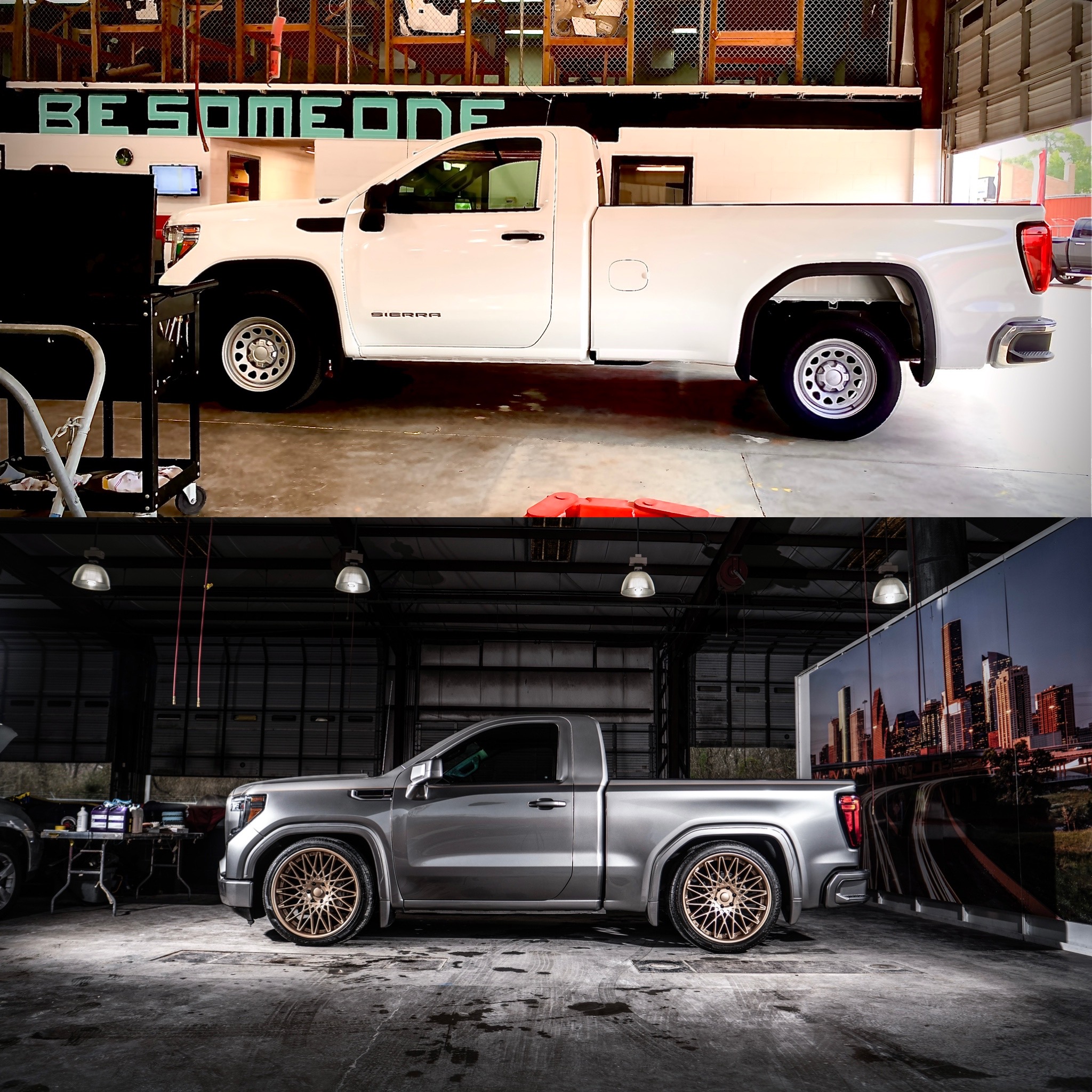
Ibarra’s latest mentor was his last employer Brian Cubbage, who recruited him with the promise of growth opportunities, including in management. When Cubbage retired in 2020, he sold his modern, independent 18,000- sq.-ft. shop to his protegee. Ibarra now has it all, because operating Leading Edge is also compatible with quality family time he cherishes and even an occasional custom build side gig like the 2020 GMC Sierra he modified into a two-door shortbed truck. Before it was auctioned, it got “tons of publicity and made the centerfold of Street Trucks magazine. I’m still getting requests to build trucks.”
“Things have worked out better than I could have ever imagined,” Ibarra says; and he’s paying it forward. “It means everything to me to be able to hire kids and mentor them, just like I was when I was at UTI.”
A Supportive Shop Culture
One of his first hires was UTI student Kaleb Higginbotham, a Louisiana native with a strong mechanical aptitude nurtured by his father. Restoring an all-terrain vehicle, he got at age 12 from his father “was the turning point,” Higginbotham says. “It set my mind to think differently about my future.” While completing UTI’s auto tech program, Higginbotham considered the logical next step of an entry-level mechanic’s job. Instead, he opted to learn and grow at Leading Edge, accepting a part-time porter post. “Me being me, I took to collision repair right away. I saw I’d be learning new things,” he says.
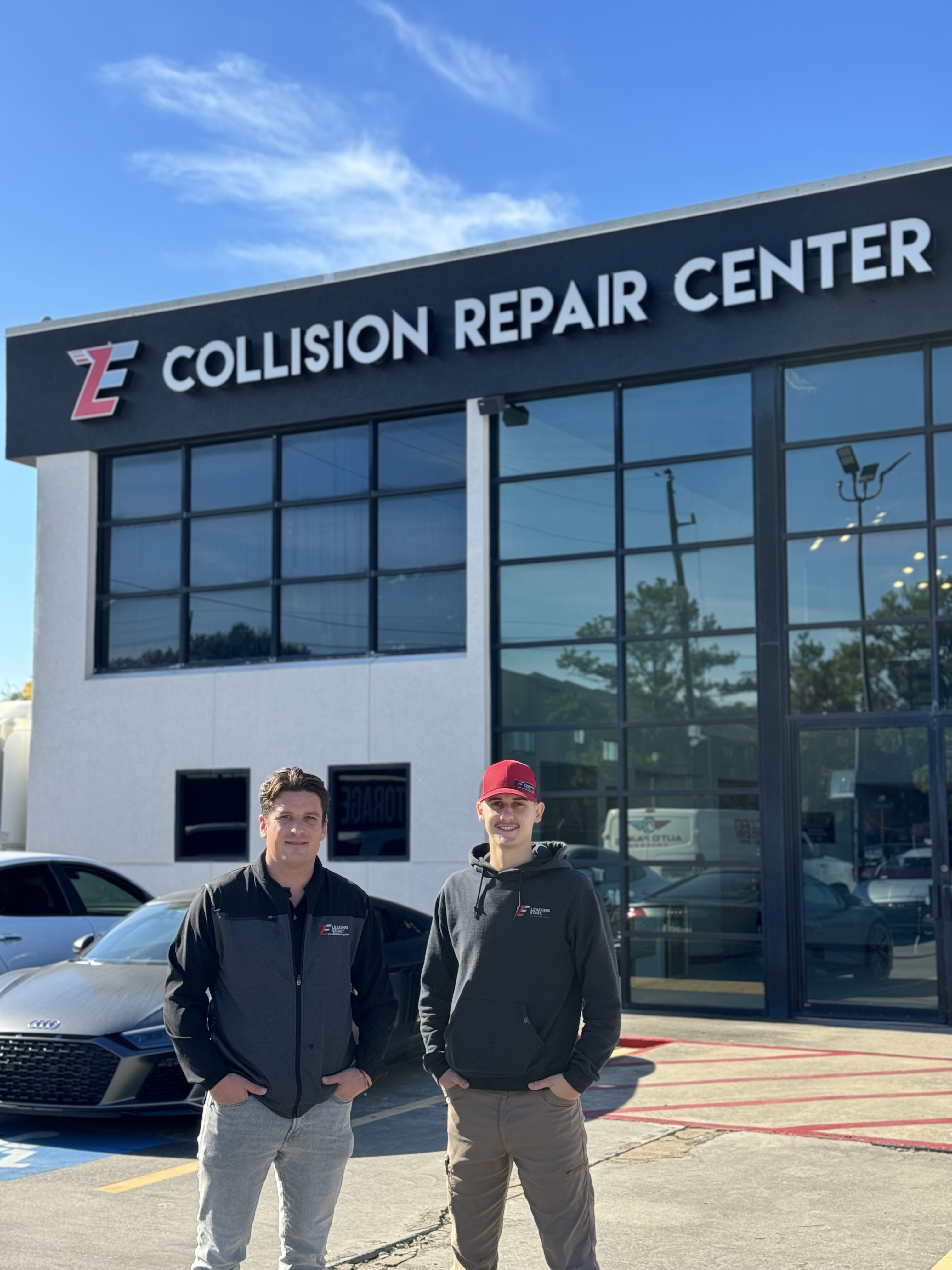
Ibarra says Higginbotham is a hard-working, quick learner whose “reception to criticism has allowed him to grow.” Entry-level talent will make mistakes, Ibarra says, but “learning from mistakes is what matters. Kaleb isn't sensitive to being corrected.”
Higginbotham observes, “The experience at school is not like the hands-on work you do at a shop. It’s a different learning curve, and it can be overwhelming. I think young people get discouraged because they think they are capable of doing more than they can.” Leading Edge’s supportive culture makes Higginbotham feel he made the right choice switching to collision repair.
His first year, working in the parts department, he jumped at any chance to work in the shop, whether it was trash duty, porting cars or simple buffing jobs. His initiative was well received. “Everyone was open to letting me watch and grow and get hands-on,” he says.
Ibarra moved Higginbotham to different areas of the shop. For his current role, the young tech job shadowed Ibarra to learn the duties of a production manager, a job he hopes will prepare him to run his own shop one day. Higginbotham enjoys the challenges of balancing the shop workload, understanding the different ways students learn so he can help develop their talent, and participating in production meetings where “we bounce ideas around, finding better ways of doing things. That's something Leading Edge is really good at.”
“Adan is a big part of my mentoring at Leading Edge,” he says. “He let me find out what things I liked more and then let me grow in the things I was good at.”
Something Higginbotham excels at is the mechanical side of collision repair work, including advanced driver assistance system (ADAS) calibrations. The first Leading Edge employee to go to I-CAR’s Chicago Technical Center, Higginbotham appreciated how much the three-day hands-on training accelerated his ADAS calibration skills. “We’re working on getting an ADAS bay,” he explains, “and the things I learned about OEM procedures and tools are helping me and the shop.”
Solving Talent Shortage ‘Up to Us’
Mentoring and growth opportunities have kept employee morale high and turnover low at Leading Edge. Ibarra says he is disturbed by the high number of collision repair students dropping out of the field. The solution to the talent shortage “is up to us,” Ibarra says.
“There’s such a void to bridge that gap from schools to the industry and take young talent and groom them as technicians. Some shops don’t want to put in the effort to groom techs. They just want to hire people who can already do the work. But we can’t just ask ourselves, ‘What am I going to get out of it?’ We can’t just take, take, take. We need to think of what the industry has given us and what we are going to give back.”
I-CAR Support that Goes Two-Ways
Ibarra depends on I-CAR for knowledge, education and training to support his business, and he is advocating for more courses in Spanish. He maintains Platinum™ in estimating to help out during surges of new business and models the importance of training by staying up to date on repair techniques. As a Gold Class shop, Leading Edge is able to subscribe to unlimited training for all employees.
In return for the support I-CAR provides his business, Ibarra actively supports I-CAR priorities. He encourages all collision repairers to get involved in I-CAR’s mission to promote complete, safe and quality collision repairs and to support students and schools by becoming a volunteer. This year, fundraising undertaken by the I-CAR committee he heads to aid a popular but underfunded high school collision repair program is being videotaped. “We want to set an example and showcase what the industry can do to help schools,” he explains. “We can all do more.”